

The last post just reminded me of some images I came across a while ago shot by Sergei Mikhailovich Prokudin-Gorskii who was commissioned by Tsar Nicholas II to undertake a photographic survery of the Russian Empire.
As the intro on the website says, these images are pretty amazing considering they were taken before WWI even started.
Link here
I found this on the boston.com.
Subscribe To

 Posts
All Comments
Posts
All Comments
Thursday, 22 September 2011


Fantastic colour photos from WW2
Anyone who knows me is well aware photography is my first love, music my second and technology my third. So I've decided to try and post interesting links up relating to stuff I find on the internet.
Anyway here's a few links to some colour images from the US home front in the 2nd world war.
http://www.theatlantic.com/infocus/2011/08/world-war-ii-the-american-home-front-in-color/100122/
Black and whites of women at war
http://www.theatlantic.com/infocus/2011/09/world-war-ii-women-at-war/100145/
some black and whites from the british home front
http://www.theatlantic.com/infocus/2011/07/world-war-ii-the-battle-of-britain/100102/
Thanks to editor and minnie the minx on U75 for the links
Anyway here's a few links to some colour images from the US home front in the 2nd world war.
http://www.theatlantic.com/infocus/2011/08/world-war-ii-the-american-home-front-in-color/100122/
Black and whites of women at war
http://www.theatlantic.com/infocus/2011/09/world-war-ii-women-at-war/100145/
some black and whites from the british home front
http://www.theatlantic.com/infocus/2011/07/world-war-ii-the-battle-of-britain/100102/
Thanks to editor and minnie the minx on U75 for the links
Friday, 9 September 2011
Building your own portable soundsystem
Before I start I should really say many many thanks to fractionMan of urban75, without his patient guidance, instructions and explanation I wouldnt have known what to source to build this or where to start.
I was prompted to have a go at building this soundsystem after spending a weekend away with a freind who had a blockrocker portable PA. I decided I must have one, but after discovering they were £130 decided it was a bit rich for me. Luckily I came across a thread on urban75 entitled 'The building your own portable soundsystem thread' and thats what kick started me.
What I used:
1. 2 X Soundlab 6.5" full range speakers (50 Watts) - About £10 each
Clicky

2. A Lepai TA2020 class T amp - About £20
Clicky


3. A 12V 6800 mAh Rechargable li-ion (comes with recharge plug but needs a US adapter, also comes with correct cable for to plug straight into the amp)
Clicky
4. A case, these should be quite sturdy, and some depth with also benefit the sound, I was donated a record flight case that measure 12x12x9, so unfortunately I couldnt fit both speakers on one side, so I decided to have them on opposite sides. Flight case donate by DJ Rerun - but you can pick something similar up for about £20 on ebay ;)
This is the case I used with the speakers already installed

5. Nuts and bolts (8), Speaker cable and connection spades - Picked these up from halfords for next to nothing.
Connection spades:
Nuts & Bolts:

Speaker wire:

Prepare the electrics
So the first thing to do was to wire everything up and make sure I had no faulty equipment. This was straight forward enough, if you've ever wired up a car or home stereo, its exactly the same.
1. Run the battery cable to the amp
2. Wire speakers to amp using cable and spades (chose spades instead of solder to make it easier to swap drives out if they get damaged) - This amp can actually run up to 4 of these speakers if you wire them in a paralell configuration, I am just running to, so stuck with a standard wiring configuation.
3. Plug in a headphone to phono cable to the amp, attach an mp3 player, fire it all up and make sure it works (at this point there'll be no bass, because the drives are not held in a structure, its the box that helps provide the low end frequency).
Installing the speakers in the box
As I dont really have any power tools I took this to work to do, it was quite straight forward. If you are planning on using an aluminium flight case make sure you have metal blades and drill bits. My case is hardboard with a foil coating on (to make it look metal).
1. Place speakers face down on side of box where you want them to sit, and draw around the outside. I then drew an inner circle 1 cm in from the original circle, this is because the speakers have a lip where the bolts go to hold them in place.
2. Drill a hole big enough to fit a jigsaw blade just on the inside of the inner circle
3. Use drilled hole as starting point to cut out speaker hole.
4. Repeat on the other side.
5. Put speakers in place and drill correct size holes for the bolts.
6. Bolt speakers in.
Installing final electrics
This is very straight forward, you basically wire everything up the same, the difference this time is that as I go I Stuck the amp and battery to the inside with velcro, this makes the amp easy to remove if i decide not to use this system any more, and also makes the battery easy to remove for recharging.
And voila, one finished soundsystem, take it in the garden and piss your neighbours off.
I am planning on making some additions to this set up, i have a bluetooh receiver for audio i want to try and install, so i can play music wirelessly from my iphone. I also want to drill a hole so i can pass a cable out to plug into dj equipment. Ill add info to this blog when its done.
Update: Bluetooth headset working, Im just using a Jabra BT3030 dog tag bluetooth receiver on the end of the input cable.
Video of the beast running......
I was prompted to have a go at building this soundsystem after spending a weekend away with a freind who had a blockrocker portable PA. I decided I must have one, but after discovering they were £130 decided it was a bit rich for me. Luckily I came across a thread on urban75 entitled 'The building your own portable soundsystem thread' and thats what kick started me.
What I used:
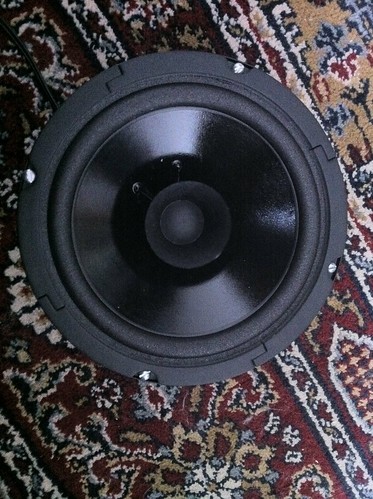
1. 2 X Soundlab 6.5" full range speakers (50 Watts) - About £10 each
Clicky
2. A Lepai TA2020 class T amp - About £20
Clicky
3. A 12V 6800 mAh Rechargable li-ion (comes with recharge plug but needs a US adapter, also comes with correct cable for to plug straight into the amp)
Clicky
4. A case, these should be quite sturdy, and some depth with also benefit the sound, I was donated a record flight case that measure 12x12x9, so unfortunately I couldnt fit both speakers on one side, so I decided to have them on opposite sides. Flight case donate by DJ Rerun - but you can pick something similar up for about £20 on ebay ;)
This is the case I used with the speakers already installed
5. Nuts and bolts (8), Speaker cable and connection spades - Picked these up from halfords for next to nothing.
Connection spades:
Nuts & Bolts:
Speaker wire:
Prepare the electrics
So the first thing to do was to wire everything up and make sure I had no faulty equipment. This was straight forward enough, if you've ever wired up a car or home stereo, its exactly the same.
1. Run the battery cable to the amp
2. Wire speakers to amp using cable and spades (chose spades instead of solder to make it easier to swap drives out if they get damaged) - This amp can actually run up to 4 of these speakers if you wire them in a paralell configuration, I am just running to, so stuck with a standard wiring configuation.
3. Plug in a headphone to phono cable to the amp, attach an mp3 player, fire it all up and make sure it works (at this point there'll be no bass, because the drives are not held in a structure, its the box that helps provide the low end frequency).
Installing the speakers in the box
As I dont really have any power tools I took this to work to do, it was quite straight forward. If you are planning on using an aluminium flight case make sure you have metal blades and drill bits. My case is hardboard with a foil coating on (to make it look metal).
1. Place speakers face down on side of box where you want them to sit, and draw around the outside. I then drew an inner circle 1 cm in from the original circle, this is because the speakers have a lip where the bolts go to hold them in place.
2. Drill a hole big enough to fit a jigsaw blade just on the inside of the inner circle
3. Use drilled hole as starting point to cut out speaker hole.
4. Repeat on the other side.
5. Put speakers in place and drill correct size holes for the bolts.
6. Bolt speakers in.
Installing final electrics
This is very straight forward, you basically wire everything up the same, the difference this time is that as I go I Stuck the amp and battery to the inside with velcro, this makes the amp easy to remove if i decide not to use this system any more, and also makes the battery easy to remove for recharging.
And voila, one finished soundsystem, take it in the garden and piss your neighbours off.
I am planning on making some additions to this set up, i have a bluetooh receiver for audio i want to try and install, so i can play music wirelessly from my iphone. I also want to drill a hole so i can pass a cable out to plug into dj equipment. Ill add info to this blog when its done.
Update: Bluetooth headset working, Im just using a Jabra BT3030 dog tag bluetooth receiver on the end of the input cable.
Video of the beast running......
Tuesday, 5 April 2011
Technological advancement, mindsharing, Infoanarchism and how it may affect the political landscape.
So I seemed to have got involved in a discussion about recent changes in political culture, some people saying that they do see a change in political culture, and some people saying absolutely not, we then moved onto why there seemed to be a changed in political culture, and I suggested that it was due to the idea of mindsharing, technological advancements and most particularly infoanarchism.
Mindshares
At this point maybe I think its best I give a rundown of what I mean by the 2 terms I'm throwing about here, as to some they may seem a little odd. The chances are if you've used the web you've used an info anarchist site, or a mindshare, or both, and many people regularly use them on a daily basis and they've infiltrated silently into your life. Beginning with the concept of a 'mindshare', the term basically refers to social network plaforms, the term is coined (in my view) because it enables you to put whats on your mind out in public, and enables you to influence others, in the same respect other people can put whats on their mind and influence you, a prime example is something like facebook, myspace etc, somewhere where you can communicate and share ideas.
Infoanarchism
Now infoanarchist theory is an interesting one, it doesn't relate to a 'movement' in the way that you use a term like 'anarchist', instead it relates more to a principle of anonymous information sharing, according to wikipedia the term was first coined in an TIME magazine article about Ian Clarke, who took lead role in designing Freenet, which was an early anonymous information sharing resource. So looking at how this has developed over the period of time since freenet was first launched, what types of infoanarchy sites do we have today? Well the first and probably the most newsworthy is wikileaks, a site where anyone can submit information regardless of how secret its meant to be, also the copycat sites that opened in the wake of wikileaks (balkanleaks, indoleaks, openleaks...... just to name a few). Another thing that comes under the umbrella of infoanarchism is the rejection of the principle of copyright (something I have to say I am not in favour of), however if you use P2P sharing, then chances are you are undertaking activities relating to the infoanarchist principles.
So how does all this affect the political landscape
Well this part basically works on my assumption (and I think its an assumption that many people would take if they thought about it) that a democratic government is by principle always at the will of the general consensus of the majority (the public). So how does technology become involved in the empowerment of people? Well I think its safe to say that one of the most drastic changes to our world in the last half century, was the invention of a protocol and microchips that allowed data to be transferred by copper wiring, starting with 0's and 1's, moving onto letters and characters and eventually onto multimedia (where we are today) and its undisputable that the whole process is much much faster than it was when first invented. This is important because we no longer had to discuss politics as a conversation with the right person at the right time, nor did we have to arrange to meet an organisation who shared similar views as us, but we could read and write our views 24 hours a day, 7 days a week, and as long as there was no problems with the server it was held on, then it would remain there for others to see, and for others to comment on.
This is where social media comes in, social media does a number of things, firstly it lets us communicate, secondly it brings us together under the interests and thoughts that we share. Research into internet usage and its reltionship to advertising clearly shows that infact we dont actually interact online according to our demographic values, but we actually interact online based on our shared interests, regardless of gender, ages, ethnicity, because those things need to be visible to be realised, where as text will always come without the inihibitions that we have in real life. So the obvious point to make here is that we actually unknowingly influence each other with our political values when we post that BBC link on facebook.
Now lets be clear, I'm not saying this era of political dissent is something new, we had strikes, marches, direct action all through the past centuries, however in the period before the internet these were organised by unions, organisations and small groups, brought together more by the environment that they shared , where you'd have to organise a meeting, build consensus before even considering the action, and even then you'd still be combatting the media who would edit a story to put their particular spin or agenda to it.
So theory is all very well, but what does this mean in 'real' terms?
Well in real terms I guess that these technological principles have actually filled a void that was left behind after the devolution of our heavy industries and the communities that went with them. For a long period of time England had a massive heavy industry, and with any huge workforce there would be a union campaigning in the interests of the workers that subscribed to it. Whilst we still have unions, with the lack of heavy industries, in the modern age unions seem to support 'professions', so whilst the unions campaign for fairer deals in our professions we have time to read and formulate opinion, then I can share it with others. For example, I see something on wikileaks, I post it to facebook so my friends see it, they start commenting and we discuss it, whilst this is going on Ill search for a group who oppose this kind of thing, find out what they're doing, then post that on facebook for other people to see. Whilst the technology hasnt actually changed what we're doing, it has drastically altered the accessibility of information (regardless of whether its reported in the news, or whether its in a pure unfiltered form on a site like wikileaks), it has sped up how fast the information travels, we see video from protests here and abroad in nearly realtime, we can comment, and those who need to can quickly recruit, plan and re-organise. In short the technological aspects of what I'm talking about have essentially made self empowerment a fast, free, easy process, and enables us to do this outside the environ limitations we faced in the past.
So what does this mean for the future?
This I think is the complicated part, the two sides to the story I think are that developments like this will either unify or fragment society, we'll either come together as a few big masses possibly standing for different things, but strong in our numbers, or lots of fragmented groups standing for a multitude of different things (in some respects almost causing a more anarchic way of life). The most important thing to remember is that you have the power of free speech, you have the ability to share that with others worldwide, you are able to contribute to the future of information sharing and politics, and that politicians ought to be aware that the information generation will and can make decisions for themselves and will always be stronger than the governments trying to temper them.
Mindshares
At this point maybe I think its best I give a rundown of what I mean by the 2 terms I'm throwing about here, as to some they may seem a little odd. The chances are if you've used the web you've used an info anarchist site, or a mindshare, or both, and many people regularly use them on a daily basis and they've infiltrated silently into your life. Beginning with the concept of a 'mindshare', the term basically refers to social network plaforms, the term is coined (in my view) because it enables you to put whats on your mind out in public, and enables you to influence others, in the same respect other people can put whats on their mind and influence you, a prime example is something like facebook, myspace etc, somewhere where you can communicate and share ideas.
Infoanarchism
Now infoanarchist theory is an interesting one, it doesn't relate to a 'movement' in the way that you use a term like 'anarchist', instead it relates more to a principle of anonymous information sharing, according to wikipedia the term was first coined in an TIME magazine article about Ian Clarke, who took lead role in designing Freenet, which was an early anonymous information sharing resource. So looking at how this has developed over the period of time since freenet was first launched, what types of infoanarchy sites do we have today? Well the first and probably the most newsworthy is wikileaks, a site where anyone can submit information regardless of how secret its meant to be, also the copycat sites that opened in the wake of wikileaks (balkanleaks, indoleaks, openleaks...... just to name a few). Another thing that comes under the umbrella of infoanarchism is the rejection of the principle of copyright (something I have to say I am not in favour of), however if you use P2P sharing, then chances are you are undertaking activities relating to the infoanarchist principles.
So how does all this affect the political landscape
Well this part basically works on my assumption (and I think its an assumption that many people would take if they thought about it) that a democratic government is by principle always at the will of the general consensus of the majority (the public). So how does technology become involved in the empowerment of people? Well I think its safe to say that one of the most drastic changes to our world in the last half century, was the invention of a protocol and microchips that allowed data to be transferred by copper wiring, starting with 0's and 1's, moving onto letters and characters and eventually onto multimedia (where we are today) and its undisputable that the whole process is much much faster than it was when first invented. This is important because we no longer had to discuss politics as a conversation with the right person at the right time, nor did we have to arrange to meet an organisation who shared similar views as us, but we could read and write our views 24 hours a day, 7 days a week, and as long as there was no problems with the server it was held on, then it would remain there for others to see, and for others to comment on.
This is where social media comes in, social media does a number of things, firstly it lets us communicate, secondly it brings us together under the interests and thoughts that we share. Research into internet usage and its reltionship to advertising clearly shows that infact we dont actually interact online according to our demographic values, but we actually interact online based on our shared interests, regardless of gender, ages, ethnicity, because those things need to be visible to be realised, where as text will always come without the inihibitions that we have in real life. So the obvious point to make here is that we actually unknowingly influence each other with our political values when we post that BBC link on facebook.
Now lets be clear, I'm not saying this era of political dissent is something new, we had strikes, marches, direct action all through the past centuries, however in the period before the internet these were organised by unions, organisations and small groups, brought together more by the environment that they shared , where you'd have to organise a meeting, build consensus before even considering the action, and even then you'd still be combatting the media who would edit a story to put their particular spin or agenda to it.
So theory is all very well, but what does this mean in 'real' terms?
Well in real terms I guess that these technological principles have actually filled a void that was left behind after the devolution of our heavy industries and the communities that went with them. For a long period of time England had a massive heavy industry, and with any huge workforce there would be a union campaigning in the interests of the workers that subscribed to it. Whilst we still have unions, with the lack of heavy industries, in the modern age unions seem to support 'professions', so whilst the unions campaign for fairer deals in our professions we have time to read and formulate opinion, then I can share it with others. For example, I see something on wikileaks, I post it to facebook so my friends see it, they start commenting and we discuss it, whilst this is going on Ill search for a group who oppose this kind of thing, find out what they're doing, then post that on facebook for other people to see. Whilst the technology hasnt actually changed what we're doing, it has drastically altered the accessibility of information (regardless of whether its reported in the news, or whether its in a pure unfiltered form on a site like wikileaks), it has sped up how fast the information travels, we see video from protests here and abroad in nearly realtime, we can comment, and those who need to can quickly recruit, plan and re-organise. In short the technological aspects of what I'm talking about have essentially made self empowerment a fast, free, easy process, and enables us to do this outside the environ limitations we faced in the past.
So what does this mean for the future?
This I think is the complicated part, the two sides to the story I think are that developments like this will either unify or fragment society, we'll either come together as a few big masses possibly standing for different things, but strong in our numbers, or lots of fragmented groups standing for a multitude of different things (in some respects almost causing a more anarchic way of life). The most important thing to remember is that you have the power of free speech, you have the ability to share that with others worldwide, you are able to contribute to the future of information sharing and politics, and that politicians ought to be aware that the information generation will and can make decisions for themselves and will always be stronger than the governments trying to temper them.
Thursday, 31 March 2011
Here's a copy of my little rant about the misrepresentation of the 'Black Bloc' at the TUC demo on 26/3/11
I'd been wanting to write about this for a while but when I stumbled across (via Urban75) an atrocious piece of journalism on the guardian I decided to have a little blurch in the comments.
I've decided to copy it here before it gets lost into the ether of a wealth of sensible and ridiculous comments on the guardians database.
Anyway you can find the original article here (it verges on laughable).
http://www.guardian.co.uk/commentisfree/2011/mar/31/black-bloc-anti-cuts-protest
I've decided to copy it here before it gets lost into the ether of a wealth of sensible and ridiculous comments on the guardians database.
Well I'm glad to see so many comments from who literally have no clue about what this type of protest is.
Anyway you can find the original article here (it verges on laughable).
http://www.guardian.co.uk/commentisfree/2011/mar/31/black-bloc-anti-cuts-protest
Wednesday, 23 March 2011
Jamie olivers dream school
Came across an old forum post I wrote about the first episode of this, I thought it may be of some interest here so I copied over...... Make of it what you will.
Anyway here's David starkeys guide to burning a heretic
Clicky
I watched this and thought it was quite interesting. The problem that David Starkey had is that he would have been taught in a day when throwing around insults like that by the teachers would have been acceptable, if a student had answered back they'd have probably been caned, unfortunately this doesnt really promote respect for differences in the community, and Starkey was a prime example of that. If I'd have said anything like that to my students then I'd expect to be in for a disciplinary by the end of the week.
Callow was interesting, he took a genuinely nice approach to the students, which they responded well to to begin with, however you can see he started struggling as different students lost interest etc...... I noticed in the previews it looks like he has a shout at them at some point, which of course they wont respond to.
I liked rolf's approach too, he's quite good humoured and doesnt really have any fear, but what he pointed out, and i think is probably true of schooling in general is the class was too big to pay each and every student enough attention in the time allowed.
That professor was ace, full on kill or cure technique there, the ones that stayed, fascinated and will be talking about that for weeks, the ones that didnt, shocked, and will be talking about that for weeks...... whichever way you look at it job done...... I loved the fact they just suddenly cut to him with a rotary saw cutting a pig in half with all their shocked faces in the background.
Ellen was always going to have a reasonably easy time, taking a small group of students out to do something that most likely they've never done before, is probably well out of their comfort zone, and she did it well by not insisting on doing all the helming etc, making cups of tea and dinner for them. I've got upmost respect for that woman, and this completely re-affirmed that.
I think the key points that could be taken from this is what can be done when you give people the resources and the freedom they need to teach they can do a good job, however in Starkey's case he probably took the wrong tact, and it flew back in his face a bit, but as was mentioned in it, he's an old school bloke who has probably only ever given guest speeches in university. But we'll never be able to do that in schools because there is not enough funding, and teachers aren't allowed to be properly inventive because their accountable to the numerous piece of paperwork to constantly fill in showing that students have acheived the measurable targets. In short it really isnt the students failing themselves, its the system that fails the schools and doesnt allow them to do what they need to do.
One thing that I think is going to be problematic for most of them is that technology has basically bred kids to multitask, and people who embraced technology etc have picked up that skill too, this is something I dont think will have been picked up by 'teachers' yet, but at the same time. The other point is about someone mentioning on the thread earlier about the students having computers/phones etc, they'll be there voluntarily, they're all over 16, you cant confiscate items like you can at shools, and tbh all confiscation will do is make them find more inventive ways of concealing what they're doing, and I think Jamie Oliver and the head realise that.
I dont know if anyone remembers a program featuring a teacher called Phil Beadle, but I thought his approach could really bring a lot to the classroom, however we still end up stuck with this out of date system which really does no-one any favours.
If we had a system of training teachers that literally that basically outlined what they need to do to maintain professionalism, how to do their paperwork and then let them get on with what they wanted to do for a few months, and if it was clear they were idiots get rid of them, and if not let them stay, I seriously think long term we'd have much better success rates in schools. I think thats what this program will actually end up commenting on the most, the idea that restricting the curriculum in order to bring it into line with every other school in the country is actually failing about 50% of the students who are attending school.
Anyway here's David starkeys guide to burning a heretic
Clicky
Monday, 21 March 2011

Subscribe to:
Posts (Atom)
Vandalism is the voice of the unheard, why are they unheard? Because when 450,000 thousand march in protests at public service cuts and seculirastion of the british society they were ignored, when millions marched against the invasions of middle eastern countries they were ignored. Government has no interest in popular concensus, they're merely interested in lining their own pockets and protecting their investments whilst the people down on their luck watch from the other side of the road.